Demand Planning
What demand forecasting should be about, how to measure planning success, and how to achieve it
6×2 hours


I train demand and inventory planning teams. Live, online, two hours at a time.
Your planners solve real cases, build their own simulations, and apply the concepts the same day. I am Nicolas Vandeput — I wrote three books on forecasting and inventory optimization, and I teach at CentraleSupélec in Paris.
Train your team









Our live virtual sessions (max. 2 hours) are designed for maximum engagement and impact. Using interactive tools, participants actively engage through questions and discussions.
They will solve real-world case studies, create their own simulations and apply the concepts directly themselves.
Our curriculum is trusted by universities and professionals worldwide, empowering planners and executives alike to sharpen their skills and deliver real business results.
What demand forecasting should be about, how to measure planning success, and how to achieve it
Build forecasting models in Excel — trend, damped trend, seasonality — then measure them against a benchmark and control overfitting
How to balance inventory levels, manage an inventory planning process, and how to make your own simulations
Pilot a supply chain as a team, feel the bullwhip effect, and see what information sharing actually fixes
How business strategy sets supply chain strategy, the building blocks of S&OP, and an executive S&OP meeting played out as a game
A full business game: teams run a supply chain end to end — suppliers, service targets, warehousing — and see what each trade-off costs

State-of-the-art supply chain practices

Debate best and bad practices, share experiences, and perform self-assessment polls

Using our interactive tool, all participants will answer open and quantitative questions

Participate in supply chain simulation games with your colleagues

Perform Do-It-Yourself exercises on various business cases

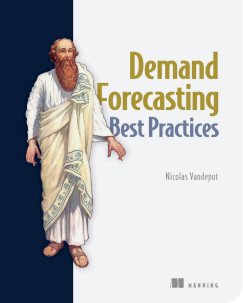
Working with Nicolas Vandeput and the SupChains Team has started to fundamentally change how we approach demand forecasting at Qnity. After reading his excellent and approachable Demand Forecasting Best Practices book and completing the first wave of training, we successfully moved away from legacy forecast accuracy metrics and implemented Forecast Value Added framework across all business units. That change immediately surfaced issues and behaviors we had not previously been able to see and started to genuinely improve decision‑making.
We are now actively applying Nicolas’ framework to make demand more explicit and decision‑ready, have completed an initial ML forecasting proof of concept, and are running a second wave of training while piloting SupChains’ forecast‑as‑a‑service.
Matti Varheenmaa – Global Supply Chain Manager, Qnity Electronics
Read our book
Watch our video

Download the SupChains Way